From understanding energy audits to recognising everyday electricity wastage, Mr Mlonzi shares how CEEP’s Energy Management for Sustainable South Africa Short Learning Programme broadened his understanding of energy management and its importance in industry.
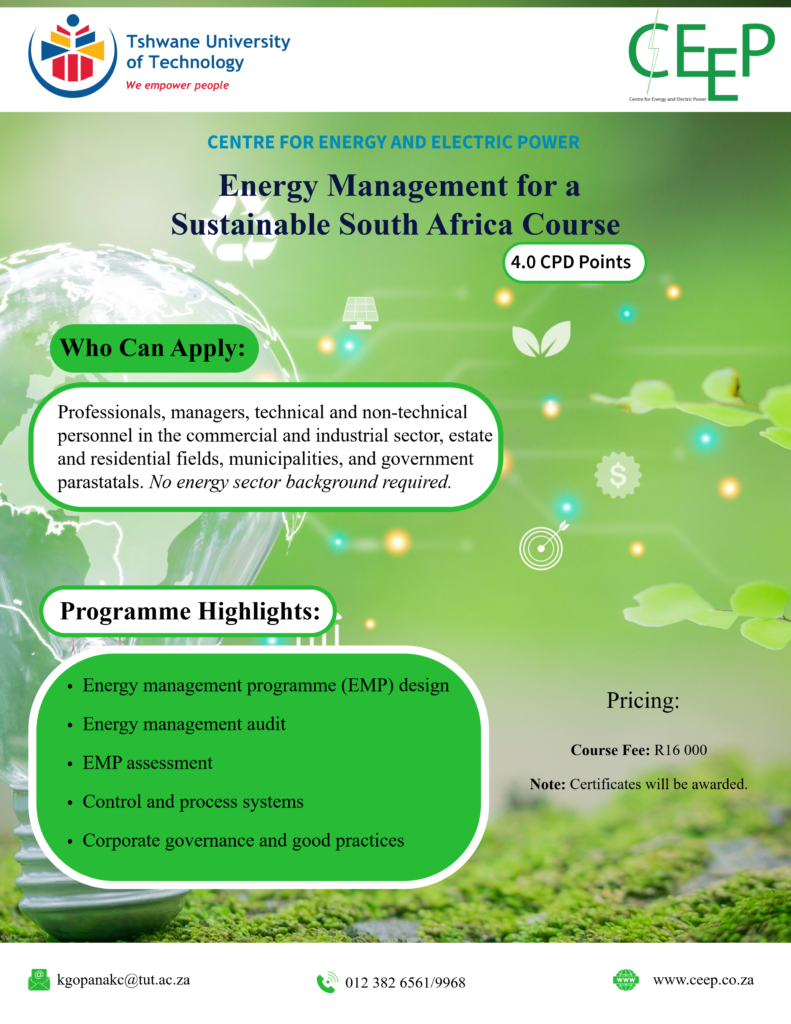
For Mr Mlonzi, participating in the Centre of Energy and Electrical Power (CEEP) Short Learning Programme (SLP) in Energy Management for Sustainable SA provided an opportunity to deepen his understanding of these principles, particularly energy auditing and the practical aspects of managing energy in industrial environments.
Energy management plays an important role in improving energy efficiency, reducing unnecessary electricity consumption and promoting responsible resource use. Achieving meaningful change begins with understanding how energy is consumed, where wastage occurs and what can be done to address it.
Understanding Energy Auditing and Its Role in Industry
Mr Mlonzi explained that his primary motivation for enrolling in the programme was to gain a better understanding of energy auditing, including how energy audits are conducted and implemented within companies.
The programme exposed him to several areas of energy management, beginning with an introduction to the subject before exploring energy auditing, equipment that can be audited, and aspects of energy system maintenance.
Among the equipment discussed were lighting systems, ventilation systems and boilers, highlighting the different areas in which energy consumption can be assessed.
For Mr Mlonzi, this broader exposure helped him understand the different elements involved in energy management and the role that energy audits can play in identifying opportunities to improve efficiency.
His experience highlights the value of professional development programmes that introduce participants to the technical considerations involved in energy management and encourage a broader understanding of the subject.
Recognising the Impact of Everyday Energy Consumption
One of the most significant takeaways from the programme was a greater awareness of how seemingly small actions can contribute to electricity wastage and energy costs.
Mr Mlonzi highlighted the importance of switching off appliances when they are no longer in use, explaining that these everyday practices can contribute to electricity savings.
He reflected on how the programme made him more conscious of the smaller contributors to energy wastage and their potential impact on electricity bills.
This lesson extended beyond industrial environments to everyday practices within institutions such as Tshwane University of Technology (TUT). It reinforced the idea that effective energy management requires both technical knowledge and an awareness of individual and organisational behaviour.
While energy audits and specialised equipment assessments are important, everyday energy-saving practices can also contribute to a broader culture of responsible energy use.
Taking Energy Awareness into the Classroom
Although Mr Mlonzi has not yet had the opportunity to apply his newly acquired knowledge directly within an industrial setting, he has begun sharing aspects of what he learned through his lecturing responsibilities.
By raising students’ awareness of energy management and the importance of reducing unnecessary consumption, he is helping introduce these principles into the learning environment.
This demonstrates another way professional development can create value: knowledge gained through training can be shared with others, extending its potential impact beyond the individual participant.
As energy efficiency remains an important consideration across industries and institutions, building awareness among students and professionals can contribute to a better understanding of responsible energy use.
Who Should Consider the Programme?
Drawing on his experience, Mr Mlonzi recommended the programme to individuals involved in management, company billing and financial responsibilities, as well as those who need to understand energy management within an industrial context.
He explained that the programme covers a range of relevant topics, providing participants with a broader understanding of the subject and the considerations involved in managing energy.
For professionals seeking to strengthen their understanding of energy management, the programme offers an opportunity to explore energy auditing, equipment assessments and energy system maintenance while developing greater awareness of energy consumption and efficiency.
His recommendation highlights the relevance of energy management knowledge to professionals whose responsibilities may involve operational decisions, energy expenditure or the efficient use of resources.
Advancing Energy Knowledge Through CEEP
Mr Mlonzi’s experience illustrates how specialised training can strengthen awareness of energy management and encourage participants to recognise opportunities for more responsible energy use.
Although he has not yet experienced direct industrial application or new career opportunities as a result of the programme, he has begun applying his learning by creating awareness among his students. This reflects the potential for knowledge gained through professional development to reach wider audiences through teaching and knowledge sharing.
Through its Short Learning Programmes, the Centre of Energy and Electrical Power continues to provide opportunities for professional learning and the development of knowledge in energy and electrical power.
For prospective participants, Mr Mlonzi’s experience offers a reminder that improving energy management begins with understanding how energy is used, recognising where wastage occurs and sharing knowledge to encourage more responsible practices.